 Pickleball Tayo
The short answer
What should you know before joining pickleball open play?
Before joining pickleball open play, confirm the skill level, cost, queue, rotation, and equipment arrangements. Arrive ready to follow the host's process, introduce yourself, and ask for beginner guidance when needed.
Primary reference: USA Pickleball: Sportsmanship guide.
On this page
Open play is a shared session where players rotate into games. The format can vary between venues, so a clear message to the host is more useful than assuming every queue works the same way.
What does the visual lesson show?
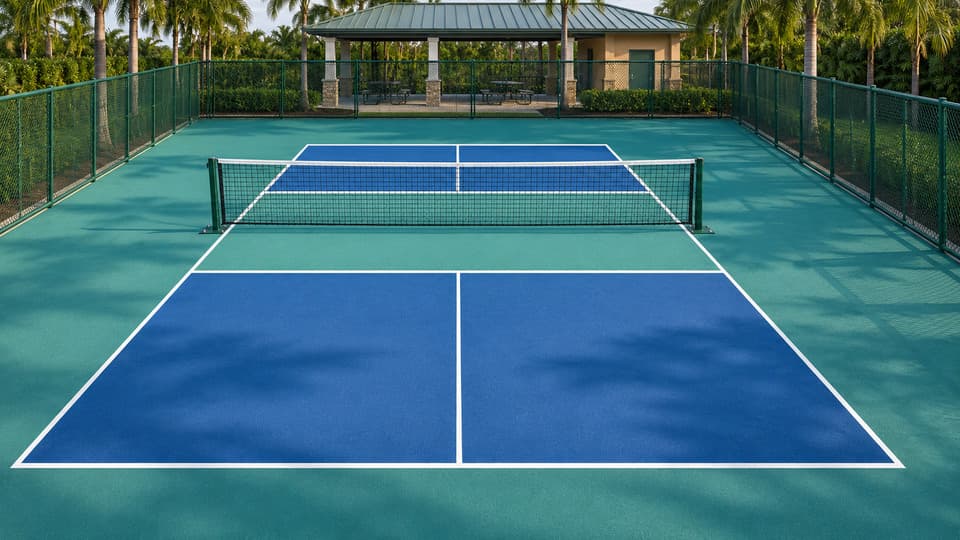
Make room for your first game.
Check the rotation, meet the group, and ask how play works.
Generated illustration with authored motion. Ball flight is illustrative; the written lesson explains the decisions.
What should you ask when booking open play?
Tell the host your experience level, whether you need equipment, and which session you want. Ask what the fee covers and whether there is a player cap or waitlist.
A practical message is: “Hi, first open play ko. Beginner-friendly ba itong slot, may mahihiram na paddle, at paano ang rotation?” Keep the reply so you can check the details on arrival.
How does the local open-play queue work?
Some hosts use paddle stacks, others a list or timed rounds. Ask where to put your name and what happens after a game. Do not rearrange other people’s place in a queue to stay with a preferred group.
If you need a break, tell the host rather than leaving a gap that delays everyone. Be ready when called and keep equipment outside the playing area while waiting.
How can you make your first game comfortable?
Introduce yourself and mention that you are new. Agree on who can help with the score. Save technical questions for a pause so the rally is not interrupted by several competing instructions.
Respect the advertised level. If a game is too fast, ask the host for a more suitable pairing. If you are more experienced, support the format rather than turning a beginner session into a performance test.
What should you confirm before returning to open play?
Thank the host and ask which session fits your current level. Note one thing to practise before returning. Familiarity with the queue and court layout often makes the second visit much easier.
This is a participation guide, not an announcement of a scheduled PickleballTayo event. Check the venue’s latest organizer post directly for dates, prices, and availability.
How can you apply this guide step by step?
How can you check whether the session fits your level?
Confirm the advertised level, orientation, equipment, total cost, and player cap. An open-play listing does not automatically promise a beginner lesson.
How should you join the court rotation?
Introduce yourself to the host and learn the queue. Be ready when called, and ask how breaks and partner requests are handled without moving others back.
How can you reconnect with the group after playing?
Mention your experience, accept score help if needed, and follow the rotation after the game. Save one skill to revisit and the next suitable session.
A hypothetical worked example
How might this work in a session?
You arrive with a friend and want to stay together, but the session uses a queue that mixes pairs. Moving the friend’s paddle forward would inconvenience other people. Ask the host whether pairing is possible within the format, or move yourself back if needed. A shared session works when preferences are handled openly rather than quietly changing who gets the next court.
What are common mistakes with your first pickleball open play?
Queue rearranged for friends
Ask the host about pairing and preserve a fair turn order for people already waiting.
Beginner enters fast session
Confirm the level beforehand and seek a suitable group instead of changing the advertised activity.
Break creates a missing player
Tell the host before stepping away so the next game can start without confusion.
What should you try during your next session?
Prepare a concise message asking about level, equipment, inclusions, and rotation. At the venue, explain the queue back to the host before your first game.
What to observe: Judge the visit by whether you understood how to enter, play, rotate, and return. There is no need to make the first open-play experience a winning-performance test.
Confirm the level, cost, queue, and rotation before you step onto a court.
What should you check before your session?
0 of 5 ready. Resets on reload.
Check your understanding
Choose an answer to see the explanation.
What should you record after trying the task?
Name one observable condition, then count a small sample. These taps record your observations; they do not detect shots or assess a rating.
Define one condition before counting.
Entries stay in this page and reset on reload. Export a text file to keep them.
What else should you know about your first pickleball open play?
Are all open-play sessions beginner-friendly?
No. Confirm the level and whether an orientation is available before paying.
Does this page list a real upcoming event?
No. It is an evergreen guide. Confirm live details with the organizer.
Which sources support this guide?
- USA Pickleball: Sportsmanship guide
Conduct, fair rotation, and line-call guidance; official rules take precedence.
- Philippine Pickleball Federation: Clubs, courts and calendar
Philippine club, court, and calendar discovery; confirm availability with the actual organizer.
How was this guide prepared?
Prepared with AI assistance for human editorial review. No named coach has reviewed this draft. Examples and practice tasks are editorial explanations; no first-hand coaching or product testing is claimed.
Sources checked: . For organized play, check the current rulebook and event format. This date records source checking, not coach approval.