 Pickleball Tayo
The short answer
How do you organize a pickleball round robin?
Plan a pickleball round robin by defining teams and format, counting matches, allocating court slots, and adding a time buffer. Publish scoring, result reporting, tie-break procedures, and practical arrangements before players commit.
Primary reference: USA Pickleball: Educator and program resources.
On this page
A round robin lets each team play every other team in its group. It is a useful club format when you want multiple matchups, but the court count and match length can make a small field take longer than expected.
What does the visual lesson show?
Give every round a plan.
Make the schedule and court rotation easy to follow.
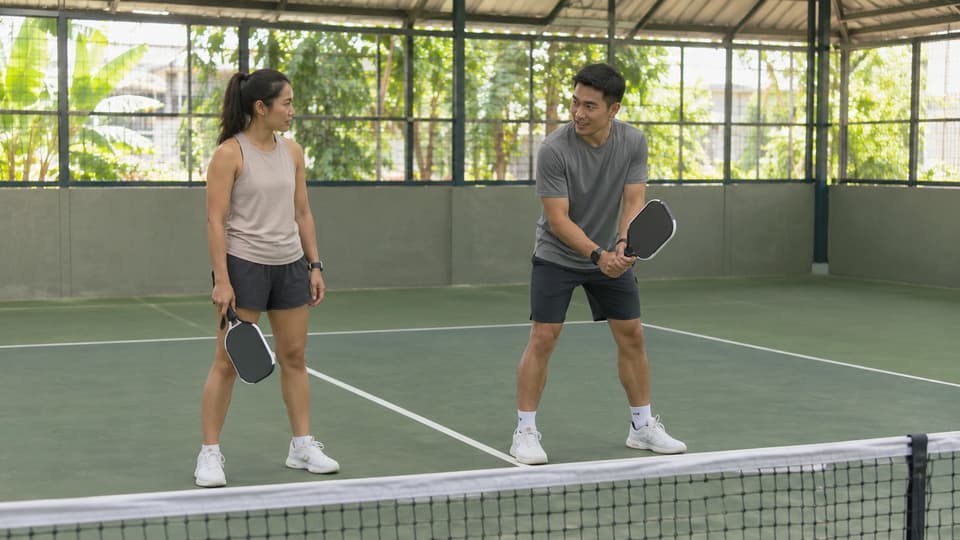
Generated illustration with authored motion. Ball flight is illustrative; the written lesson explains the decisions.
What should you define before drawing a round robin?
Choose whether entrants are fixed pairs or individual players with rotating partners. The calculator here covers fixed pairs playing one match against each other pair. Rotating-partner socials need a different schedule.
State the score target, scoring system, warm-up allowance, and how a match ends. For timed games, decide what happens when the horn sounds and explain the procedure in advance.
How many matches and court slots will you need?
For a single fixed-pair round robin with n teams, the match count is n × (n − 1) ÷ 2. Each team plays n − 1 matches. That is the workload before finals or consolation games.
The tool estimates sequential match rounds without double-booking a team. It assumes the same slot length for each match and court availability throughout. Untimed win-by-two games can exceed the estimate, so use a realistic buffer.
How should players report round-robin results?
Put one person in charge of recording scores. Publish the ranking and tie-break procedure before play starts. If a result is entered incorrectly, keep a clear way to correct it with both teams.
Do not invent a tie-break at the end because it favors a preferred team. The aim is a format participants can understand before they spend their time and money.
Which practical gaps need time in the schedule?
Allow check-in, brief warm-ups, ball retrieval, results reporting, and rest. Confirm venue access, lighting, cancellation terms, and who can stop play for unsafe conditions.
Keep announcements factual: venue confirmation, exact inclusions, division, entry cap, fee, and organizer contact. This planning example is not a live PickleballTayo event and does not imply a booking or registration service.
How can you apply this guide step by step?
How should you define fixed teams and the format?
Confirm that entrants are pairs staying together. A rotating-partner social is a different scheduling problem, even if participants casually call both formats round robin.
How can you calculate the match workload?
Count every team pairing once and assign slots without simultaneous duties. Use realistic match and changeover time; untimed win-by-two games can exceed an estimate.
Which procedures should you publish before play?
Share scoring, standings, tie-breaks, check-in, and delay handling before collecting commitments. Record results in one visible process with a way to correct mistakes.
A hypothetical worked example
How might this work in a session?
Six fixed pairs generate fifteen matchups. With two courts, a schedule cannot simply place any two unfinished matches together: a team might appear in both. The planner preserves team conflicts by using round-based pairings and court batches. It may leave a court unused in some slots, so the result is one feasible schedule rather than a guarantee of the shortest event.
What are common mistakes with a pickleball round robin?
Match count mistaken for duration
Include court batching, team conflicts, changeovers, and buffer rather than multiplying by an ideal court average.
Individual partners need rotation
Choose the correct format; this calculator holds the teams fixed.
Tie-break invented after play
Define it before the first match and apply the published procedure consistently.
What should you try during your next session?
Try five teams on two courts, then seven on three. Inspect every suggested slot for duplicate team assignments and compare the total workload with the available venue booking.
What to observe: Track actual match duration and waiting after a real event. Use those observations to improve the next estimate rather than presenting an illustrative calculator as a booking guarantee.
Calculate the workload, add a buffer, and publish the format before players commit.
How much court time does your round robin need?
15 matches · 10 slots · 180 estimated minutes
Show the suggested draw
- Slot 1: Court 1: team 1 vs 6 · Court 2: team 2 vs 5
- Slot 2: Court 1: team 3 vs 4
- Slot 3: Court 1: team 1 vs 5 · Court 2: team 6 vs 4
- Slot 4: Court 1: team 2 vs 3
- Slot 5: Court 1: team 1 vs 4 · Court 2: team 5 vs 3
- Slot 6: Court 1: team 6 vs 2
- Slot 7: Court 1: team 1 vs 3 · Court 2: team 4 vs 2
- Slot 8: Court 1: team 5 vs 6
- Slot 9: Court 1: team 1 vs 2 · Court 2: team 3 vs 6
- Slot 10: Court 1: team 4 vs 5
Each pairing plays once. A team has at most one match in a slot. The draw can include rest periods and is a planning estimate, not a booking.
Check your understanding
Choose an answer to see the explanation.
What should you record after trying the task?
Name one observable condition, then count a small sample. These taps record your observations; they do not detect shots or assess a rating.
Define one condition before counting.
Entries stay in this page and reset on reload. Export a text file to keep them.
What else should you know about a pickleball round robin?
Is the estimate a guaranteed finish time?
No. Match variation, breaks, delays, and venue constraints can extend the schedule.
Does the tool rotate individual partners?
No. It schedules fixed teams. A rotating-partner social requires a different draw.
Which sources support this guide?
- USA Pickleball: Educator and program resources
Program and educator resources; the local worksheets are original planning examples.
- 2026 USA Pickleball Official Rulebook
Primary reference for standard-play rules and event-rule exceptions.
How was this guide prepared?
Prepared with AI assistance for human editorial review. No named coach has reviewed this draft. Examples and practice tasks are editorial explanations; no first-hand coaching or product testing is claimed.
Sources checked: . For organized play, check the current rulebook and event format. This date records source checking, not coach approval.