 Pickleball Tayo
The short answer
What are the standard pickleball court dimensions?
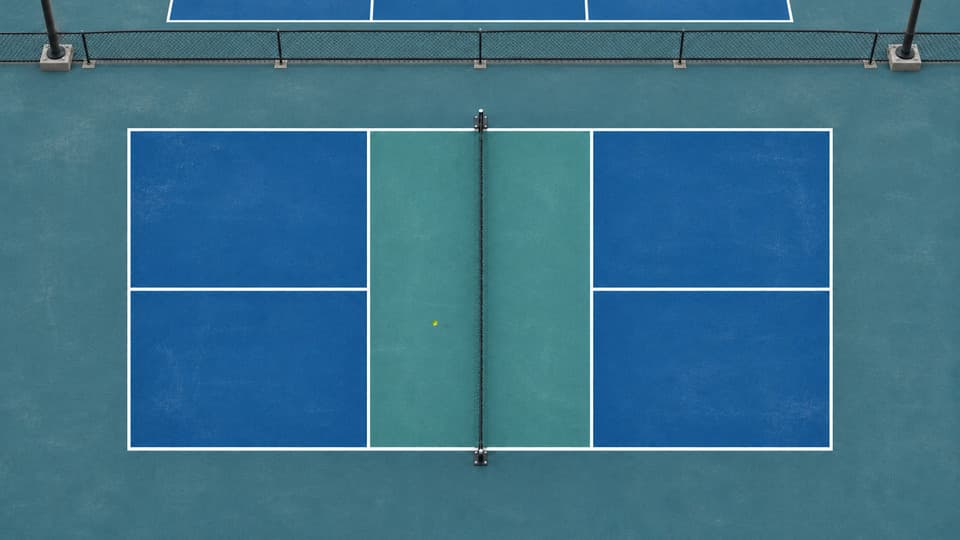
A standard pickleball court measures 20 feet wide by 44 feet long, with a kitchen extending seven feet from each side of the net. Check surrounding run-off space separately from the painted playing rectangle.
Primary reference: 2026 USA Pickleball Official Rulebook.
On this page
The painted court and the space needed to play around it are different measurements. Understanding both helps when you arrive at a shared gym, set up a portable net, or evaluate a possible club venue.
What does the visual lesson show?
See how the court fits together.
Baselines, service courts, and the kitchen on each side.
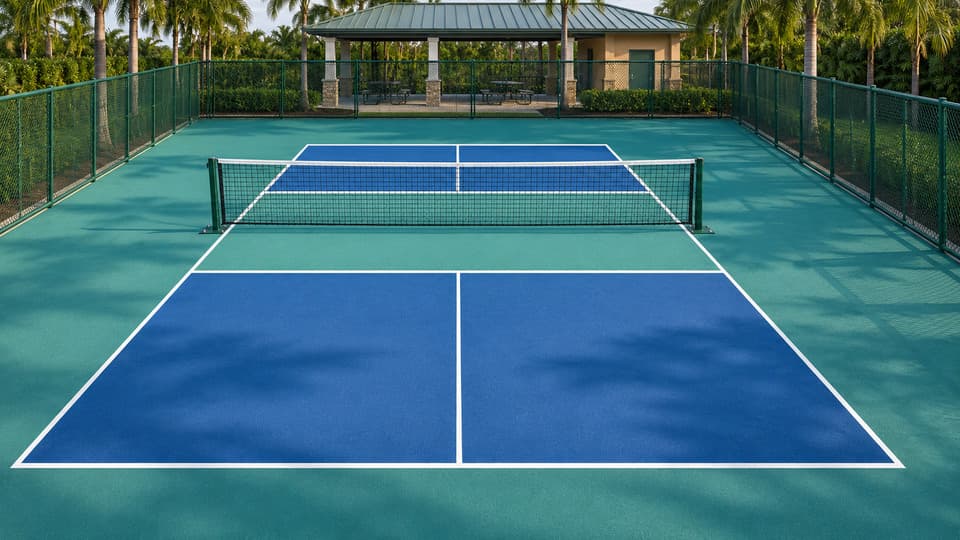
Generated illustration with authored motion. Ball flight is illustrative; the written lesson explains the decisions.
How wide and long is a pickleball court?
A standard court is 20 feet wide and 44 feet long for both singles and doubles. Find the outside boundaries first, especially on a floor shared with badminton or basketball. Walk the rectangle slowly and identify which colored lines belong to pickleball. A familiar-looking centerline from another sport can be a poor guide.
Where are the kitchen lines and service courts?
The kitchen extends seven feet from the net on each end. Service courts begin beyond it and are divided by the centerline. Trace a legal diagonal serve from one serving area to the opposite service court. This short walk connects the court view to a real position instead of leaving the measurements as isolated numbers.
Why should you check the net and surrounding space?
The standard net is 36 inches high at the sidelines and 34 inches at the center. The playing rectangle alone does not provide run-off room. The rulebook specifies a minimum playing surface of 30 by 60 feet and recommends more for some uses. Confirm the applicable construction guidance before planning a permanent facility.
What should you inspect at a shared sports venue?
Look beyond a tape measure: doors, posts, benches, bags, and neighboring games affect usable space. Confirm permission before taping a floor, and use materials accepted by the venue. A generated court view cannot certify an actual site. If you are building, engage a competent court professional rather than treating a learning illustration as a construction drawing.
How can you apply this guide step by step?
How can you identify the playing boundaries?
Trace the full playing rectangle and identify the baselines and sidelines. On shared floors, establish the pickleball color before interpreting any interior lines.
How can you identify the kitchen and service courts?
Follow the seven-foot zone on each end of the net. The service centerline begins beyond that zone; do not copy an unrelated badminton marking.
How should you inspect the usable surrounding space?
Look outside the paint for obstacles, other games, and safe access. Net height and run-off requirements need separate checks when evaluating a real setup.
A hypothetical worked example
How might this work in a session?
A gym has enough floor for the painted rectangle, but a bench sits just behind the baseline. Removing it changes usable space even though the playing dimensions stay identical. A second court has generous space but several unrelated centerlines. Inspect both the geometry and the actual obstacles. Start with the outer boundaries, identify the kitchen, and trace a serve before declaring that you understand the layout.
What are common mistakes with pickleball court dimensions?
Wrong sport’s centerline
Walk a diagonal serve using the confirmed pickleball markings before beginning the game.
Paint mistaken for full footprint
Inspect the surrounding playing surface and consult construction guidance for the actual use.
Net judged by eye only
Use the appropriate measurement and setup guidance rather than treating a drawing as certification.
What should you try during your next session?
Without looking at the court view, point out the boundaries, each kitchen line, and the diagonal service target. Then name one surrounding-space issue that the painted measurements do not describe.
What to observe: Record which marking needed clarification and who verified the setup. A court tour is an orientation exercise, not a professional inspection or a construction approval.
Identify the boundaries, kitchen, and service courts before using any nearby lines from another sport.
Check your understanding
Choose an answer to see the explanation.
What should you record after trying the task?
Name one observable condition, then count a small sample. These taps record your observations; they do not detect shots or assess a rating.
Define one condition before counting.
Entries stay in this page and reset on reload. Export a text file to keep them.
What else should you know about pickleball court dimensions?
How big is a regulation pickleball court?
The playing rectangle is 20 feet wide and 44 feet long for both singles and doubles. These dimensions describe the marked court, not the extra space needed around it for safe movement.
How far does the pickleball kitchen extend from the net?
The non-volley zone extends 7 feet from the net on each side. Its boundary line is part of the zone, so touching that line matters when judging a volley fault.
Which sources support this guide?
- 2026 USA Pickleball Official Rulebook
Primary reference for standard-play rules and event-rule exceptions.
- USA Pickleball: Courts and construction
Court dimensions, markings, and construction background.
How was this guide prepared?
Prepared with AI assistance for human editorial review. No named coach has reviewed this draft. Examples and practice tasks are editorial explanations; no first-hand coaching or product testing is claimed.
Sources checked: . For organized play, check the current rulebook and event format. This date records source checking, not coach approval.