 Pickleball Tayo
The short answer
How do you choose your first pickleball paddle?
Choose a pickleball paddle by checking grip comfort, manageable weight and balance, controlled contact, and recovery. Try equipment under similar conditions and verify event eligibility separately from marketing claims before buying.
Primary reference: USA Pickleball: Approved equipment database.
On this page
Your first paddle does not need to be a statement purchase. It needs a grip you can hold comfortably and a feel you can control through a whole session. Trying a borrowed paddle can answer questions a product label cannot.
What does the visual lesson show?
Get a feel for the paddle.
Look closely, then compare comfort and control on court.
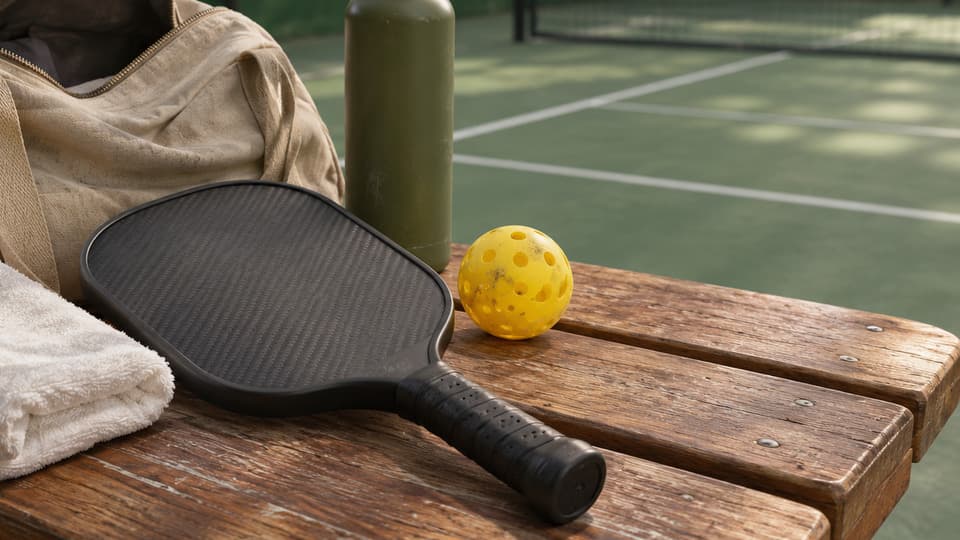
Generated illustration with authored motion. Ball flight is illustrative; the written lesson explains the decisions.
How should a pickleball paddle grip feel?
Hold the paddle in your normal ready position and make a few slow swings. Notice whether you squeeze excessively to keep control or shift your hand to reach comfortably.
If possible, compare handle shapes and grip sizes in person. A measurement or online size chart can be a starting point, but it cannot replace your experience of the actual handle.
How can you compare paddle weight and balance?
Two paddles with similar listed weights can feel different when you change direction. Try a few controlled volleys and groundstrokes rather than judging by a single full-power swing.
Keep the ball, partner, and target similar during a comparison. A few successful shots with a new paddle do not prove it caused an improvement; unfamiliarity and the feed can also affect the result.
How should you assess paddle performance claims?
Terms such as control, power, and sweet spot need context. Ask whether a seller provides a return policy, demonstration, warranty terms, and a verifiable product model. Avoid paying extra for a promised rating increase.
This guide contains no affiliate links, paid placements, or product rankings. It does not report hands-on testing. The preference tool below helps organize a trial, rather than recommending a named product.
How do you check whether a paddle is permitted for an event?
An equipment approval database can help verify an exact model for events using that standard. Approval is about eligibility, not whether a paddle is best for your hand. Event rules may use a different governing standard.
Before buying for a tournament, confirm the relevant list, model version, and current status with the organizer. Keep the receipt and warranty details, and check whether local after-sales support is available.
How can you apply this guide step by step?
What should you inspect on the paddle handle?
Try the real grip shape and size in your usual ready position. Notice whether maintaining control asks for an uncomfortable squeeze or a shifted hand.
How can you compare ordinary contacts fairly?
Use the same partner, ball, and broad target across a short trial. Contact feel and maneuverability need repeated ordinary shots rather than one maximum swing.
What should you verify before buying?
Check the exact model, return terms, warranty support, and applicable event approval list. Eligibility does not establish that the paddle fits your hand.
A hypothetical worked example
How might this work in a session?
A borrowed paddle produces a few clean winners and feels exciting, but after a full session the handle is awkward to hold. A purchase based on the first five minutes would miss the main fit issue. Compare ordinary dinks, moderate volleys, and recovery with the same ball. Ask what the listing actually specifies and what the seller supports before treating a performance claim as evidence.
What are common mistakes with choosing a pickleball paddle?
One winner drives the purchase
Compare a complete short set, comfort, and errors before attributing the outcome to equipment.
Approval confused with quality ranking
Treat approval as eligibility under a standard, then assess personal fit separately.
Marketing terms go undefined
Ask for concrete model details and a hands-on trial instead of accepting a promised skill improvement.
What should you try during your next session?
Borrow or demo two permitted paddles under similar conditions. Compare gentle contact, moderate recovery, and handle comfort. Record one tradeoff for each before checking price and support.
What to observe: Keep your observation distinct from product testing claims. A personal trial supports your choice; it does not establish a universal best paddle or a measured performance advantage.
Compare comfort and repeatability under similar conditions. Treat marketing terms as claims to investigate.
What should you compare in a paddle trial?
Compare touch and controlled contacts with the same partner and ball.
A comparison prompt, with no product rankings or affiliate recommendations. Try equipment in person.
Check your understanding
Choose an answer to see the explanation.
What should you record after trying the task?
Name one observable condition, then count a small sample. These taps record your observations; they do not detect shots or assess a rating.
Define one condition before counting.
Entries stay in this page and reset on reload. Export a text file to keep them.
What else should you know about choosing a pickleball paddle?
Does a higher price guarantee a better beginner paddle?
No. Price alone does not establish comfort, suitability, or repeatable contact.
Have these paddles been tested by PickleballTayo?
This draft recommends no specific models and contains no first-hand product testing claims.
Which sources support this guide?
- USA Pickleball: Approved equipment database
Exact-model paddle and ball approval records; approval does not establish personal fit.
How was this guide prepared?
Prepared with AI assistance for human editorial review. No named coach has reviewed this draft. Examples and practice tasks are editorial explanations; no first-hand coaching or product testing is claimed.
Sources checked: . For organized play, check the current rulebook and event format. This date records source checking, not coach approval.