 Pickleball Tayo
The short answer
What are the basic pickleball rules for beginners?
Start a pickleball rally with a diagonal serve beyond the kitchen. The serve must bounce on the receiving side, and the return must bounce on the serving side before later balls may be volleyed legally.
Primary reference: USA Pickleball: Rules summary.
On this page
The easiest way to understand pickleball rules is to follow the ball. Start with the serve, then the return, then the serving team’s next shot. Those three contacts explain why players cannot rush the net straight after serving.
What does the visual lesson show?
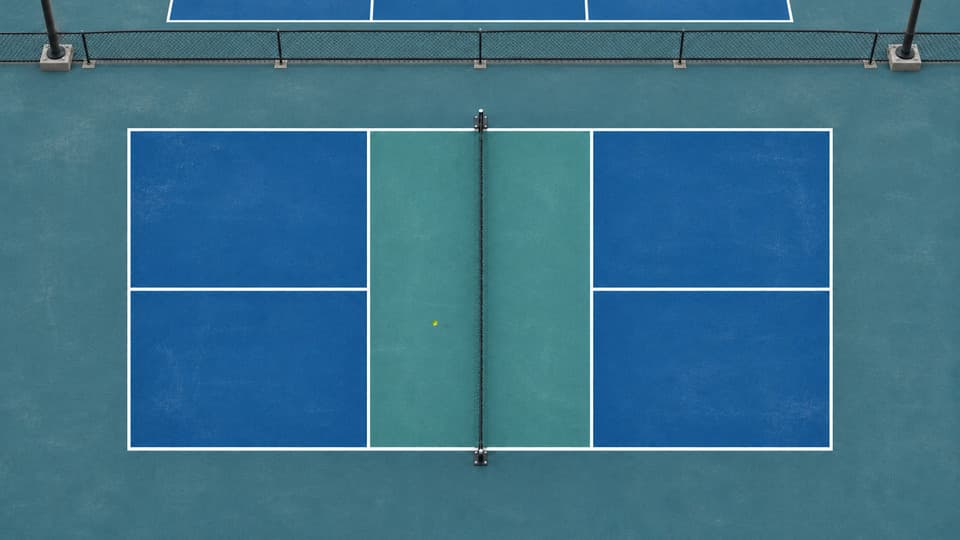
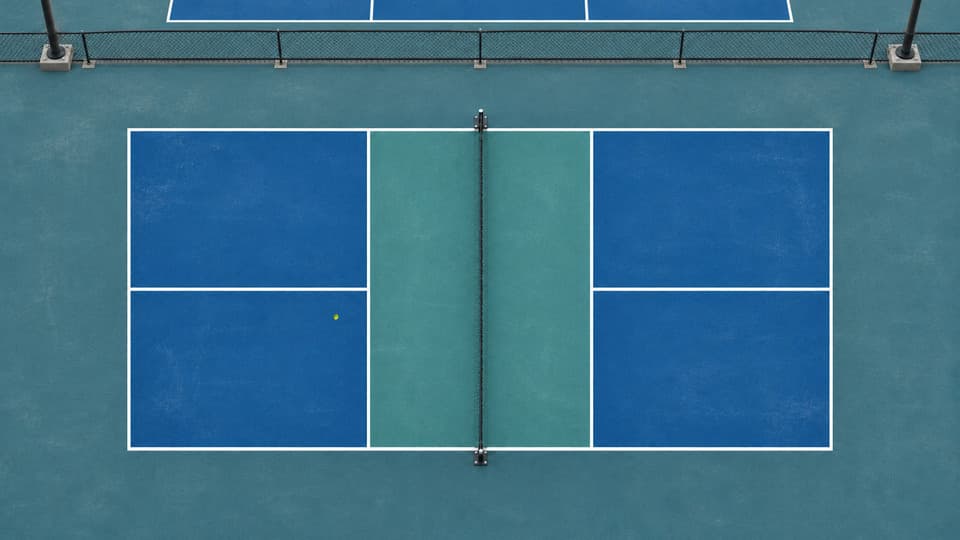
Watch the first three shots.
Serve. Return. Then the rally opens up.
Generated illustration with authored motion. Ball flight is illustrative; the written lesson explains the decisions.
How does a legal pickleball serve start the rally?
Think diagonal, with space beyond the kitchen. Do not try to solve every serving detail during your first rally; use the dedicated serving guide when you are ready to practise the motion.
The receiver should give the ball room to land. Standing too close to the baseline can leave a deep serve bouncing at your feet, which makes the return harder than it needs to be.
Why must the return of serve bounce?
Let the serve land, then send it back. The serving pair should prepare for that return to bounce. A common beginner error is stepping forward immediately after serving and taking the return out of the air.
The receiving team can move forward after returning. This is a tactical opportunity, rather than a requirement to sprint regardless of the ball. Watch the next hitter and arrive balanced.
When can you volley during a pickleball rally?
After the required bounce on the serving end, either team can volley later balls from a legal position. A volley means contacting the ball before it lands. A groundstroke comes after a bounce.
If you are unsure whether you may volley, reconstruct the first two bounces with your partner. Saying “serve bounced, return bounced” can be an easier memory aid than remembering a rule number.
How do official rules differ from local open-play customs?
A queue, a timed round, or a winners-stay rotation belongs to the session format. Ask the host how it works before joining. A local rotation does not explain whether a ball was in or a kitchen volley was legal.
For disputed edge cases or an organized match, consult the current rulebook and the event’s stated rules. This introduction focuses on standard standing play; adaptive formats may modify bounce and movement rules.
How can you apply this guide step by step?
Where must the serve bounce?
Send the serve diagonally to the correct court. The receiver waits for it to land before returning, even if the flight looks easy to volley.
Where must the return bounce?
The serving pair prepares for the return to land on its end. Stay organized for depth instead of copying the receiver’s forward movement.
When does the rally open up to volleys?
After the required bounce sequence, later balls may be volleyed legally or played after a bounce. Kitchen restrictions remain relevant to every volley.
A hypothetical worked example
How might this work in a session?
A new server hits a comfortable serve and takes several steps forward. The return floats within reach, so the server volleys it and celebrates. Being outside the kitchen does not fix the missing return bounce. Recreate the exchange slowly: identify the first bounce on the receiving end and the second on the serving end. Then play the third contact from that bounce and continue the rally.
What are common mistakes with pickleball rules?
Server rushes forward
Begin behind a position that lets a deep return bounce, then move according to the third shot.
Two bounces on one end
Point to the two different ends as you describe the serve bounce and return bounce.
Every ball is allowed two bounces
Distinguish the opening two-bounce rule from an ordinary ball bouncing twice before return.
What should you try during your next session?
Play five cooperative starts. Pause after the third contact and have each player identify both required bounces. Restart any sequence that becomes confusing before adding pace or score.
What to observe: Count correctly reconstructed starts, not rally winners. Ask a partner to explain one sequence without your help before treating the rule as settled.
The serve must bounce on the receiving end. The return must bounce on the serving end. Those are two separate required bounces.
Check your understanding
Choose an answer to see the explanation.
What should you record after trying the task?
Name one observable condition, then count a small sample. These taps record your observations; they do not detect shots or assess a rating.
Define one condition before counting.
Entries stay in this page and reset on reload. Export a text file to keep them.
What else should you know about pickleball rules?
Does the two-bounce rule mean two bounces on one end?
No. It describes one required bounce on each end after the serve starts the rally.
Do I always need to let the ball bounce?
After the two required bounces, you can volley from a legal position or play after a bounce.
Which sources support this guide?
- USA Pickleball: Rules summary
Primary introduction to serves, required bounces, scoring, and the non-volley zone.
- USA Pickleball: How to play
Beginner instruction from the sport’s US governing body.
How was this guide prepared?
Prepared with AI assistance for human editorial review. No named coach has reviewed this draft. Examples and practice tasks are editorial explanations; no first-hand coaching or product testing is claimed.
Sources checked: . For organized play, check the current rulebook and event format. This date records source checking, not coach approval.