 Pickleball Tayo
The short answer
How do you serve in pickleball?
Choose a drop serve or volley serve, use the correct foot position, and send the ball diagonally beyond the kitchen. Establish legal, repeatable contact before adding pace, then prepare for the return.
Primary reference: 2026 USA Pickleball Official Rulebook.
On this page
A serve you can repeat is more useful than one spectacular serve followed by three misses. Start with a large diagonal target, a comfortable rhythm, and enough room behind the baseline to prepare for the return.
What does the visual lesson show?
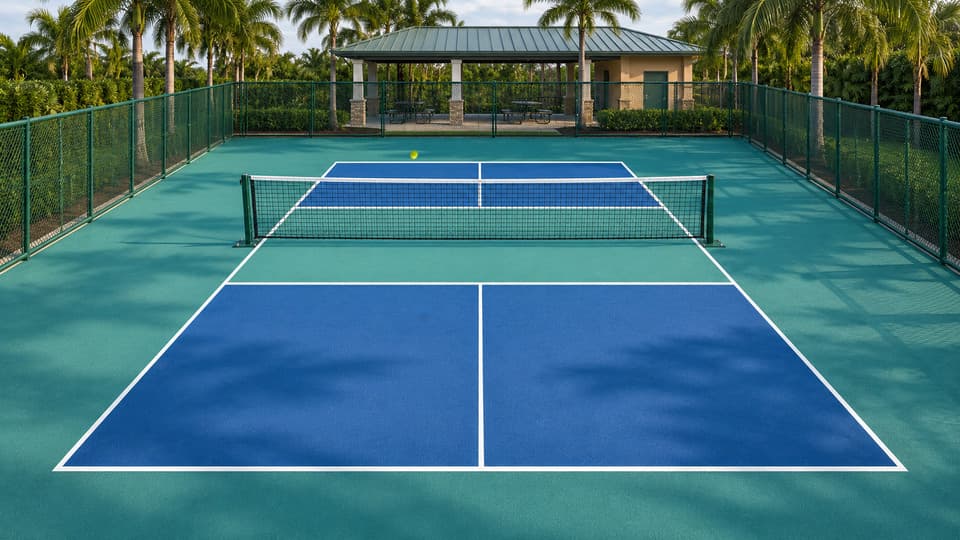
Send the serve diagonally.
Give yourself room above the net and inside the lines.
Generated illustration with authored motion. Ball flight is illustrative; the written lesson explains the decisions.
Should you use a drop serve or volley serve?
A volley serve contacts the ball before it bounces. A drop serve contacts it after a natural, unforced drop and bounce. Try both slowly and notice which gives you a cleaner contact.
For a volley serve, the paddle travels upward at contact, the ball is no higher than the waist, and the paddle head is not above the wrist joint. The drop serve has different motion provisions. Check the current rulebook for the complete requirements, including release and foot position.
Where should you aim a pickleball serve?
Aim diagonally beyond the kitchen, with room inside the far baseline and sidelines. Aiming directly at a corner gives a small error a large consequence. Place a flat marker beside the court to identify a target band without adding a trip hazard.
Once comfortable, experiment with depth at the same controlled pace. A deep serve can make the return less convenient, but a long serve starts no rally at all.
What should your serving routine include?
Look at the receiver, settle your feet, call the score, and use your chosen motion. Avoid redesigning the swing after every miss. Change one thing for the next small batch: your starting balance, contact point, or target.
After serving, remain ready for a deep return. The return must bounce on your end before you hit it. Finishing well inside the baseline can turn a successful serve into a difficult third shot.
How should you measure serve consistency?
Hit ten serves at a large target and record how many are legal and in. Next, record how many reach your intended depth. These are different measurements. Keep the first reliable before shrinking the second.
Finish with a partner returning the ball so the routine connects to real play. A quiet practice serve is useful, but the next decision is part of the skill too.
How can you apply this guide step by step?
How can you set a repeatable serving routine?
Choose the serving method and correct area. Look at the receiver, call the score, and create a comfortable starting balance before beginning the motion.
How can a broad target improve consistency?
Serve diagonally with room beyond the kitchen and inside the far boundaries. Add depth gradually while keeping the action clearly compliant.
How should you prepare for the return?
Finish available for a deep bounced return. Do not measure a good serve only at its landing and ignore the next contact it leaves you.
A hypothetical worked example
How might this work in a session?
You make eight ordinary serves, miss two ambitious ones, and remember only the best fast ball. Next game, you use that fast action on every attempt. A counted set would have told a more useful story. Keep legality, landing area, and preparation for the return separate. A reliable routine is visible across several attempts, not established by the single serve everyone noticed.
What are common mistakes with serving in pickleball?
Landing long repeatedly
Return to a larger depth margin and compare a short set before changing the entire swing.
Contact feels rushed
Slow the setup and compare release placement; avoid solving a timing issue by accelerating everything.
Return jams the server
Check how far forward the serve finish carries you and restore room for a deep bounce.
What should you try during your next session?
Count ten serves at the same broad target, then five with a natural return. Record in, intended depth, and readiness separately so the last phase can expose a movement problem.
What to observe: Use the same ball and court direction when comparing two sets. If wind or the target changes, note it rather than calling the difference a pure technique improvement.
Choose a serve style, check your feet, and practise placement before adding pace.
Check your understanding
Choose an answer to see the explanation.
What should you record after trying the task?
Name one observable condition, then count a small sample. These taps record your observations; they do not detect shots or assess a rating.
Define one condition before counting.
Entries stay in this page and reset on reload. Export a text file to keep them.
What else should you know about serving in pickleball?
Does a drop serve use all the volley-serve motion restrictions?
No. The rulebook distinguishes the two methods. A drop must be natural and unforced; the shared placement and foot rules still matter.
Should I rush forward after serving?
Prepare for the return to bounce. Move based on the next ball rather than copying the receiving team’s position.
Which sources support this guide?
- 2026 USA Pickleball Official Rulebook
Primary reference for standard-play rules and event-rule exceptions.
- USA Pickleball: Serve tips
Service technique background; use the rulebook for legal-contact requirements.
How was this guide prepared?
Prepared with AI assistance for human editorial review. No named coach has reviewed this draft. Examples and practice tasks are editorial explanations; no first-hand coaching or product testing is claimed.
Sources checked: . For organized play, check the current rulebook and event format. This date records source checking, not coach approval.