 Pickleball Tayo
The short answer
What is a third-shot drop in pickleball?
A third-shot drop is a soft shot after the serve and return, usually aimed toward the opponent's kitchen. Move forward only when its quality and the opponent's contact give you time.
Primary reference: USA Pickleball: Basics of the third-shot drop.
On this page
After your serve and the opponent’s return, you face the third shot. If opponents are already near the kitchen, hitting harder is only one option. A drop tries to bring their next contact low enough to give your pair time to move forward.
What does the visual lesson show?
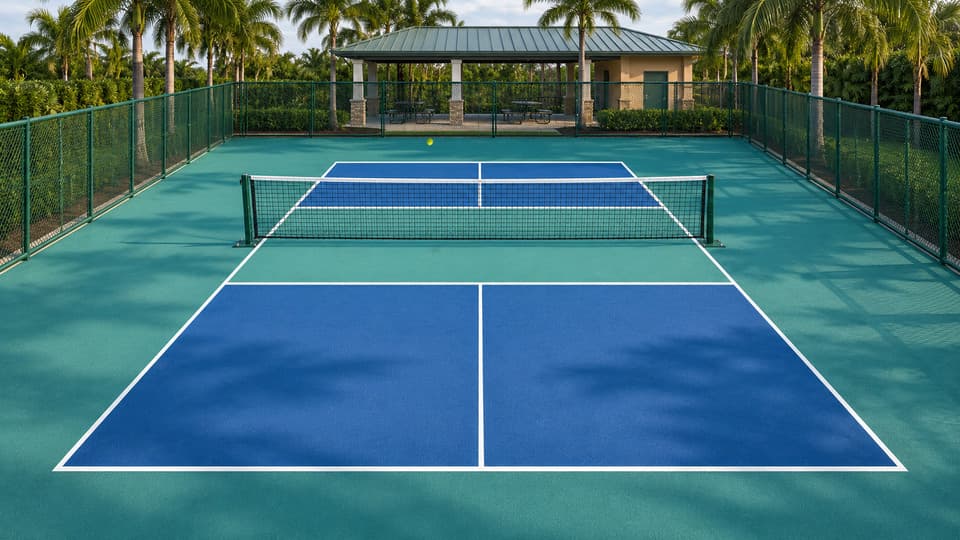
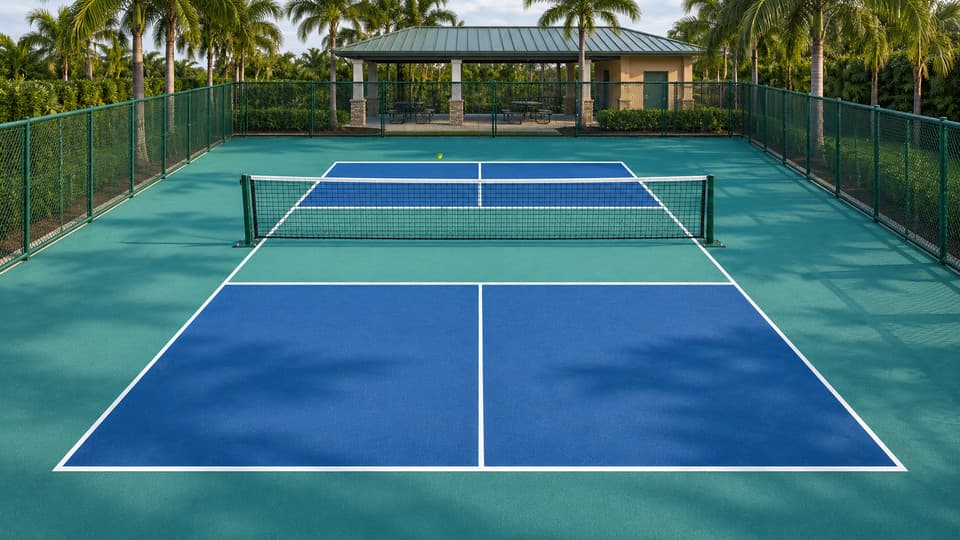
This is the third-shot drop.
Soften the flight toward the kitchen, then read the reply.
Generated illustration with authored motion. Ball flight is illustrative; the written lesson explains the decisions.
What is the purpose of a third-shot drop?
The serving team often starts farther from the net than the receiving team. A softer ball toward the kitchen can reduce the height available for an immediate attack. The objective is a more manageable reply.
Watch where the animated drop lands, then imagine an opponent reaching to volley it. The flight is illustrative. A ball landing in the kitchen can still be volleyed, so judge the opponent’s actual contact rather than the landing target alone.
How should you build a drop from shorter distances?
Begin a few steps behind the kitchen and send controlled balls toward a generous landing area. Move back only when contact feels repeatable. The baseline version asks for more distance while preserving touch.
Keep the same target during each short set. If you change the target, starting position, and swing at once, you lose the ability to tell which adjustment helped.
When should you move after a third-shot drop?
If your drop sits high, stop and prepare for pressure. If the opponent must play upward, you may have time to gain ground. Arrive balanced before their contact so that you can react.
Move with your partner. One player charging while the other stays deep creates space for the next attack. A clear “hold” or “up” can help, provided it comes early enough to be useful.
How can you measure drop quality beyond the landing?
Record a ten-ball set using three labels: net, attackable, and manageable. A ball can land in the target but still be easy to attack. This record encourages you to notice the tactical outcome.
Bring the drill into a serve-return-third-shot pattern. Your practice then includes the return’s depth and your first movement, rather than a perfectly fed ball every time.
How can you apply this guide step by step?
How should you prepare for the return of serve?
Let the return bounce and arrange a balanced contact. Give yourself a comfortable starting distance rather than meeting every deep ball while moving backward.
How can you shape a manageable third-shot reply?
Use a broad soft target near the far kitchen. A ball that lands there may still be volleyed, so include the opponent’s reach in the assessment.
When has your drop created time to move?
Gain ground when the next contact gives time. If the drop sits up, hold, get balanced, and be ready to defend the fourth shot.
A hypothetical worked example
How might this work in a session?
You hit a third shot intended as a drop and immediately run forward. The ball floats, and the opponent contacts above net height while you are still moving. Calling it a drop did not create time. Replay the same return and hold until you read the contact. A smaller advance after a better ball can leave you more prepared than a full sprint after a weak one.
What are common mistakes with the third-shot drop?
Target hit but ball attacked
Evaluate available opponent contact, not the landing label alone; depth and height affect the outcome.
Always short of the net
Move the drill closer and rebuild repeatable clearance before demanding baseline distance.
Pair splits during advance
Agree on hold and up calls and read the same opponent contact before moving.
What should you try during your next session?
Use five serve-return-drop starts. Pause at the opponent’s next contact and decide together whether to hold or move. Then play the reply and compare the prediction with what happened.
What to observe: Separate net, attackable, and manageable outcomes. A counted kitchen-landing percentage omits the tactical question the drop is meant to solve.
Advance according to the quality of your shot and the opponent’s reply. A drop is an invitation to assess, not a signal to sprint.
Check your understanding
Choose an answer to see the explanation.
What should you record after trying the task?
Name one observable condition, then count a small sample. These taps record your observations; they do not detect shots or assess a rating.
Define one condition before counting.
Entries stay in this page and reset on reload. Export a text file to keep them.
What else should you know about the third-shot drop?
Must the third shot always be a drop?
No. A drive or another controlled option may suit the incoming ball. The choice depends on balance, height, position, and your skills.
Does landing in the kitchen stop a volley?
No. An opponent outside the zone can volley a reachable ball legally.
Which sources support this guide?
- USA Pickleball: Basics of the third-shot drop
Technique background on the third-shot drop and transition toward the net.
- USA Pickleball: Third-shot drop vs. drive
Technique background for choosing between a drive and a soft drop.
How was this guide prepared?
Prepared with AI assistance for human editorial review. No named coach has reviewed this draft. Examples and practice tasks are editorial explanations; no first-hand coaching or product testing is claimed.
Sources checked: . For organized play, check the current rulebook and event format. This date records source checking, not coach approval.