 Pickleball Tayo
The short answer
How can you build a practical pickleball singles strategy?
Build a singles strategy around a dependable serve and return, broad placement targets, and recovery that responds to the opponent's contact. Judge each shot together with the space you leave for the next reply.
Primary reference: 2026 USA Pickleball Official Rulebook.
On this page
In singles, each shot changes the court you must cover alone. A ball placed wide can create an opening, but it can also pull you away from the next useful recovery position.
What does the visual lesson show?
Depth creates the next decision.
Watch the wide reply and the space it leaves to cover.
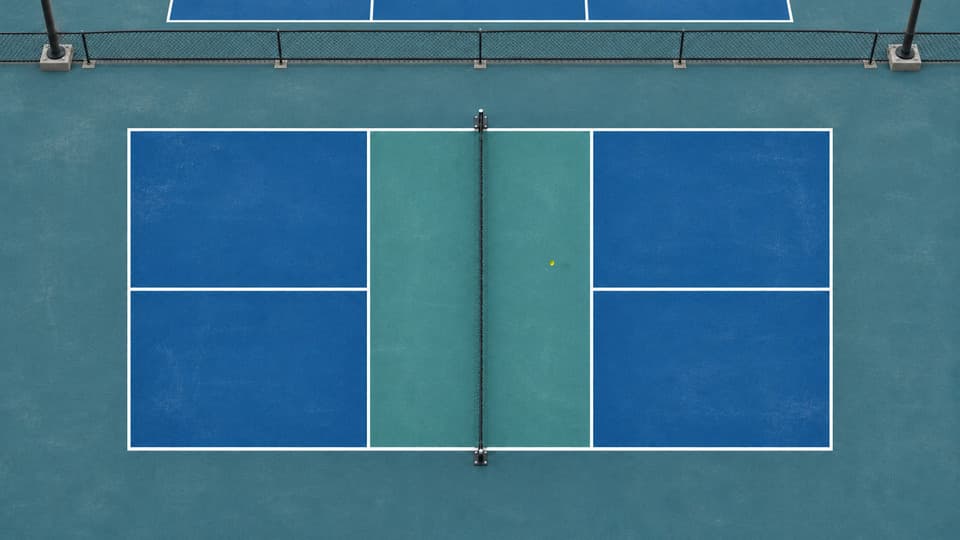
Generated illustration with authored motion. Ball flight is illustrative; the written lesson explains the decisions.
Why do dependable serves and returns matter in singles?
A controlled serve and return let you enter a rally with a plan. Use depth with margin rather than assuming a tiny corner target will solve coverage. The two-bounce requirement still shapes the first movement, so do not rush forward as though a tennis serve-and-volley pattern automatically applies.
How should the opponent's contact affect your recovery?
Where the opponent contacts influences the next likely angles. Recover to a position that helps with those options, not mechanically to a painted center spot. Your speed and reach affect what is reasonable; the flight loop can illustrate space but cannot prescribe an exact location for every player.
How can placement create a manageable singles rally?
A broad directional shot can be useful without being a winner. Notice whether it makes the opponent move while giving you time to settle. If the same wide attempt repeatedly exposes your open court, try a more central target and compare the next reply.
How should you review the first opening in a rally?
After a practice game, choose one rally where you lost position. Identify the ball that first opened the space, not only the final winner. Recreate that ball cooperatively and test a different target or recovery. This gives the next session a specific problem rather than the vague instruction to run more.
How can you apply this guide step by step?
How can you start the rally with control?
Use dependable serve and return depth with margin. Respect the initial bounce sequence so the opening movement fits pickleball rather than an assumed tennis pattern.
Which contact point shapes the likely reply angles?
Notice where the opponent can strike and which angles that creates. Your available movement determines which recovery is realistic.
How should you recover for the available reply?
Choose a position that helps with the next likely space. A successful wide shot may require a different recovery from a more central one.
A hypothetical worked example
How might this work in a session?
You drive a wide ball that makes the opponent move but recover mechanically to the painted center. Their comfortable angle reaches the space you left. A more useful review asks where their contact occurred and which replies were available. Recreate the first opening, then compare a broader target or a different recovery. Singles rewards the relationship between placement and the next position, not movement for its own sake.
What are common mistakes with pickleball singles strategy?
Center reached automatically
Relate recovery to the opponent’s actual contact rather than a fixed floor mark.
Every shot seeks a line
Compare broader targets that leave time and fewer severe reply angles.
Final winner hides first error
Reconstruct the earlier ball that first opened the court and test another choice.
What should you try during your next session?
Recreate one rally opening cooperatively from each side. Try a wide target and a broader central target, then play the reply and compare recovery demands.
What to observe: Record where the opponent contacts and whether you are prepared for the next ball. A winner count alone misses the placement-and-recovery tradeoff.
Judge the shot and the space you leave as one decision.
Check your understanding
Choose an answer to see the explanation.
What should you record after trying the task?
Name one observable condition, then count a small sample. These taps record your observations; they do not detect shots or assess a rating.
Define one condition before counting.
Entries stay in this page and reset on reload. Export a text file to keep them.
What else should you know about pickleball singles strategy?
Why is a deep return useful in singles?
A controlled deep return can keep the server farther back and give you time to organize the next position. Leave margin inside the baseline rather than treating maximum depth as the only goal.
Should singles players always rush to the kitchen?
No. Advance according to the ball, your balance, and the opponent’s options. Singles court coverage differs from doubles, so an automatic forward run may leave useful space exposed.
Which sources support this guide?
- 2026 USA Pickleball Official Rulebook
Primary reference for standard-play rules and event-rule exceptions.
- Pickleball Global: Serves and returns coaching resource
Coaching background for return depth and recovery; the practice examples here are original.
How was this guide prepared?
Prepared with AI assistance for human editorial review. No named coach has reviewed this draft. Examples and practice tasks are editorial explanations; no first-hand coaching or product testing is claimed.
Sources checked: . For organized play, check the current rulebook and event format. This date records source checking, not coach approval.