 Pickleball Tayo
The short answer
How should you move through the pickleball transition zone?
Move through the transition zone in controllable advances when your shot creates time. Get balanced before the opponent strikes, stay connected with your partner, and use a manageable reset when the reply puts you under pressure.
Primary reference: USA Pickleball: Third-shot drop vs. drive.
On this page
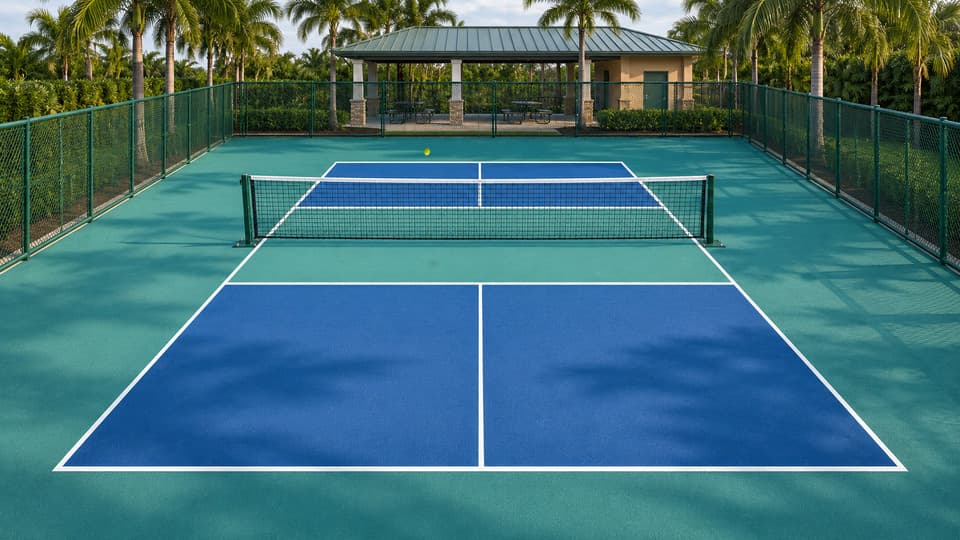
The space between the baseline and kitchen is somewhere you pass through and sometimes defend from. You do not have to cross it in one rush. The next opponent contact determines how much movement you can use.
What does the visual lesson show?
Make the next ball manageable.
Use a soft reply while you work through the middle of the court.
Generated illustration with authored motion. Ball flight is illustrative; the written lesson explains the decisions.
Should you rush all the way through the transition zone?
A small advance can be useful if it ends in a stable position. Sprinting the full distance after a weak ball can leave you moving through contact with little control. Treat progress as several decisions across the rally, rather than a single race to the kitchen.
How should your actual shot affect the next advance?
A low, manageable opponent contact can buy time. A high sitter gives the opponent attacking options. Watch their paddle and balance instead of assuming a shot called a drop has earned you a safe approach. The label does not change the available contact.
How can you stay connected to a defending partner?
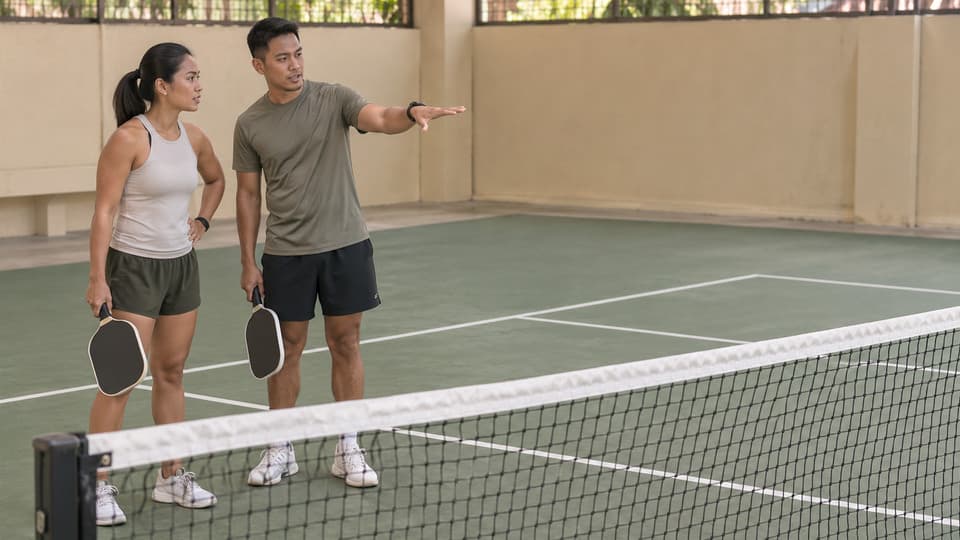
Discuss simple hold and move calls. If one player is still defending deep, consider how your advance changes the gap between you. Coverage and mobility differ between pairs, so use the visual lesson to ask questions rather than copying an exact standing distance.
How can you practise short, balanced advances?
Start in the transition area with cooperative feeds. Reset, read the feeder, and gain a little ground only when the response permits. Pause the rally when the pair loses balance. Review the triggering ball and restart, instead of continuing a scramble that conceals the original mistake.
How can you apply this guide step by step?
What does your previous shot allow you to do?
Look at height, depth, and the opponent’s available contact. A shot name does not determine whether the pair has time to gain ground.
How can you move in controllable pieces?
Advance together while there is time, then settle before a threatening strike. The useful distance varies with the ball and each player’s mobility.
When should you reset and reassess?
If pressure returns, use a manageable defensive response and read again. Recovering control can matter more than continuing a preplanned sprint.
A hypothetical worked example
How might this work in a session?
The third shot lands short enough to make the opponent lift. Your pair gains a little ground and settles. The fifth floats high, so you hold and defend. That is a coherent approach even though neither advance reaches the kitchen immediately. Repeating this read is more useful than treating the transition area as forbidden space that must be escaped in one rush.
What are common mistakes with the pickleball transition zone?
Rushing after weak drop
Hold for the reply and identify what made the next contact threatening.
Standing frozen forever
Notice manageable opponent contacts that permit a small coordinated gain.
Partner calls disagree
Simplify hold and up meanings and practise reading the same cue together.
What should you try during your next session?
Start a cooperative rally from the transition area. After each soft response, call hold or move and gain only the ground supported by the reply. Pause when the pair splits.
What to observe: Record whether the pair was balanced at opponent contact. The number of steps forward is less useful if those steps repeatedly remove control.
Gain ground when the ball gives time; get balanced when the opponent can strike.
Check your understanding
Choose an answer to see the explanation.
What should you record after trying the task?
Name one observable condition, then count a small sample. These taps record your observations; they do not detect shots or assess a rating.
Define one condition before counting.
Entries stay in this page and reset on reload. Export a text file to keep them.
What else should you know about the pickleball transition zone?
Is standing in the transition zone a pickleball fault?
No. The transition zone is a tactical description of the space between the baseline and kitchen. Your position alone is not a fault, although it can affect which replies are manageable.
Should you run forward after every soft shot?
No. Read the opponent’s contact and the quality of your ball. Move when you have time, then become balanced for the next shot instead of continuing forward through every contact.
Which sources support this guide?
- USA Pickleball: Third-shot drop vs. drive
Technique background for choosing between a drive and a soft drop.
- USA Pickleball: Level three skills
General stroke, control, and positioning resources; not an assessment of a reader’s rating.
How was this guide prepared?
Prepared with AI assistance for human editorial review. No named coach has reviewed this draft. Examples and practice tasks are editorial explanations; no first-hand coaching or product testing is claimed.
Sources checked: . For organized play, check the current rulebook and event format. This date records source checking, not coach approval.