 Pickleball Tayo
The short answer
How can you improve a controlled pickleball forehand?
Build a controlled pickleball forehand by arriving with comfortable spacing, preparing a compact swing, and guiding the ball toward a broad target. Recover the paddle and your balance so you can handle the next reply.
Primary reference: USA Pickleball: Level three skills.
On this page
A clean forehand is easier when the feet create a comfortable contact. Beginners often focus on the finish while overlooking the small adjustment that would have kept the ball in front.
What does the visual lesson show?
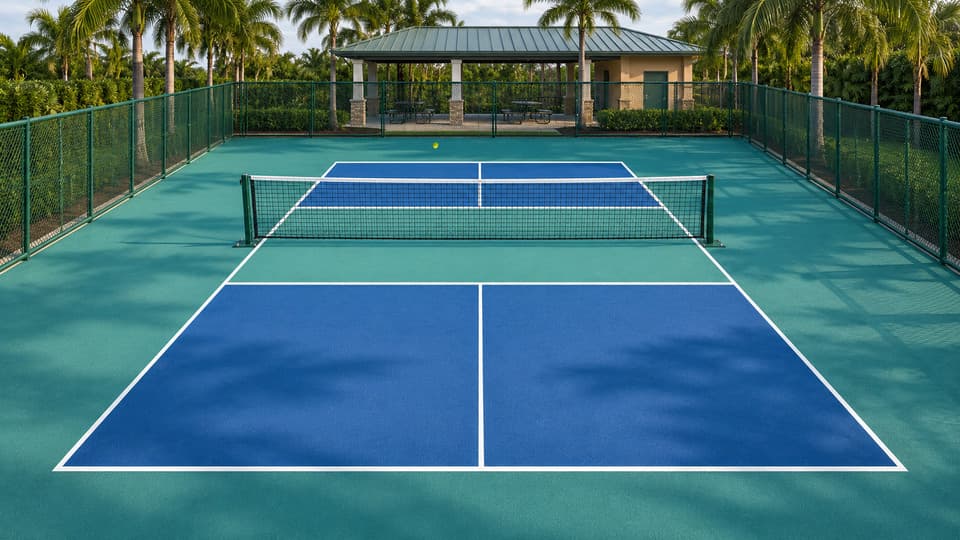
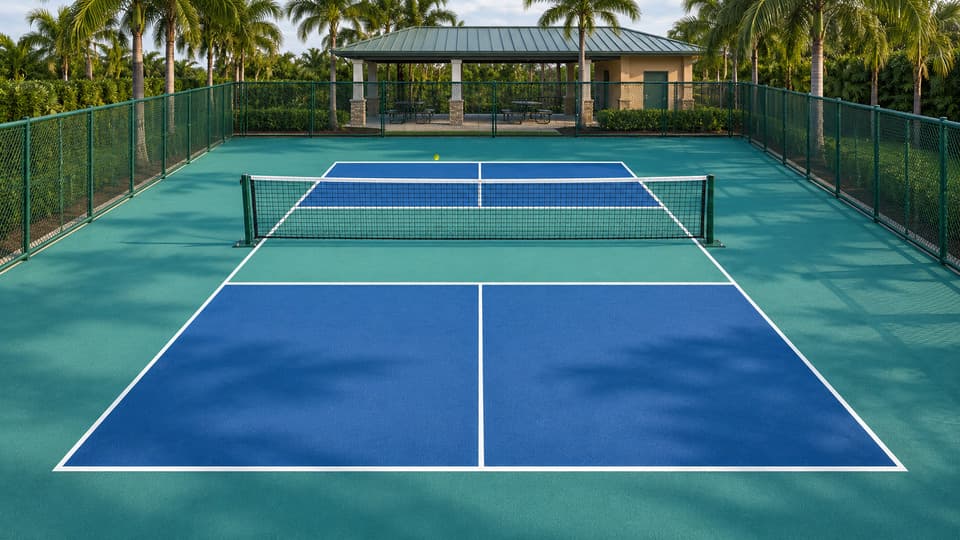
Follow the forehand flight.
A controlled forward ball with margin over the net.
Generated illustration with authored motion. Ball flight is illustrative; the written lesson explains the decisions.
How much space should you create for a forehand?
Use small adjustment steps so the bounce does not crowd your body or pull you into a full reach. Prepare early enough that your attention stays on the incoming ball. If you repeatedly hit beside your hip, check your spacing and timing before trying to swing faster.
Why should you choose control before a large finish?
Start with a compact preparation and a smooth motion through a reachable ball. Your body and grip affect the exact mechanics, so treat a general visual lesson as an explanation rather than a personal prescription. Judge whether contact sends the ball toward your intended lane with room inside the boundary.
How can you separate forehand direction from pace?
Ask for similar feeds and aim toward one broad lane. Once direction is repeatable, add a small amount of pace without moving the target. A harder ball that goes in once is less useful feedback than a short set showing what happens when you change a single variable.
How should you recover after a forehand?
After contact, bring the paddle back where you can respond. Have a partner add an easy next ball so the recovery becomes visible. If the finish leaves you turning away or taking several uncontrolled steps, reduce the effort and rebuild the sequence at a manageable pace.
How can you apply this guide step by step?
How can you arrange a comfortable bounce?
Move into a comfortable relationship with the incoming ball. Prepare early enough to notice whether you are crowded or reaching before starting the final contact.
How can you guide the forehand toward a broad target?
Use a manageable motion toward a broad lane. Preserve the same feed while testing direction so the comparison is not dominated by changing difficulty.
How should you restore your ready position?
Finish under control and bring the paddle back for another ball. Add an easy reply to check whether the stroke leaves you available.
A hypothetical worked example
How might this work in a session?
A forehand repeatedly crowds the body, so the player buys a new paddle and swings harder. The feed still bounces too close to the hip. A small adjustment step creates space and immediately changes the task. Test spacing first, then direction, then pace. Use the written steps in that order: the stroke begins with how you arrive, not the visible finish everyone notices. The loop shows the resulting ball flight.
What are common mistakes with the pickleball forehand?
Contact beside the hip
Adjust position and timing before increasing force or changing equipment.
Direction varies wildly
Simplify the preparation and keep the target broad while checking contact.
Long finish prevents reaction
Reduce effort and include an easy next ball so recovery becomes part of the task.
What should you try during your next session?
Take five similar feeds with a spacing focus, five at one directional lane, and five with a live easy reply. Keep the changes small enough that you can explain the result.
What to observe: Record crowding, reaching, target misses, and late recovery as separate observations. A single error count cannot identify which stage most needs attention.
Create space for contact, choose a broad target, and recover the paddle for the next ball.
Check your understanding
Choose an answer to see the explanation.
What should you record after trying the task?
Name one observable condition, then count a small sample. These taps record your observations; they do not detect shots or assess a rating.
Define one condition before counting.
Entries stay in this page and reset on reload. Export a text file to keep them.
What else should you know about the pickleball forehand?
Does a forehand have to be a hard shot?
No. Forehand describes the stroke side, not a required speed. A forehand can produce a drive, a softer placement, or another controlled shot depending on contact height, balance, and the intended landing.
What is a useful beginner forehand practice target?
Start with a generous target inside the court from cooperative feeds. Track contact quality and whether the ball lands in that area; reduce pace or simplify the feed when control breaks down.
Which sources support this guide?
- USA Pickleball: Level three skills
General stroke, control, and positioning resources; not an assessment of a reader’s rating.
- USA Pickleball: Third-shot drop vs. drive
Technique background for choosing between a drive and a soft drop.
How was this guide prepared?
Prepared with AI assistance for human editorial review. No named coach has reviewed this draft. Examples and practice tasks are editorial explanations; no first-hand coaching or product testing is claimed.
Sources checked: . For organized play, check the current rulebook and event format. This date records source checking, not coach approval.