 Pickleball Tayo
The short answer
What do common pickleball terms mean?
Pickleball terms describe contact, intention, position, or scoring. A volley is hit before the bounce; dink, drop, drive, and reset describe shot intentions; kitchen and transition identify areas used during a rally.
Primary reference: USA Pickleball: How to play.
On this page
Pickleball vocabulary becomes easier when each word describes something you can recognize. Instead of memorizing a long alphabetical list, attach the most useful terms to one short rally.
What does the visual lesson show?
Put the language in context.
A few familiar objects make a useful place to start.
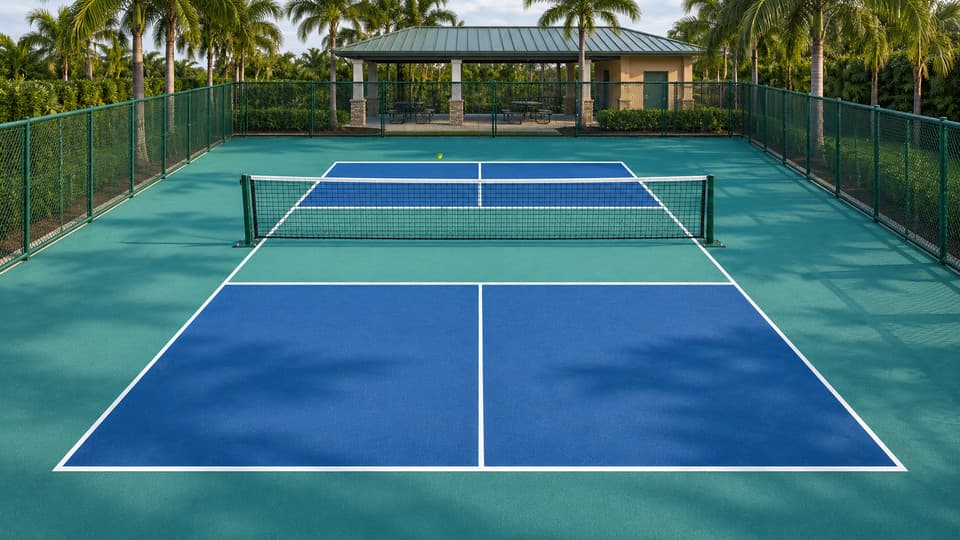
Generated illustration with authored motion. Ball flight is illustrative; the written lesson explains the decisions.
What is the difference between a groundstroke and a volley?
A groundstroke follows a bounce. A volley contacts the ball before it bounces. Those words describe contact timing, not necessarily speed. A softly played airborne ball can be a volley; a very fast ball after a bounce is still a groundstroke. This distinction matters immediately when discussing the kitchen.
What do dink, drop, drive, and reset mean?
A dink is a soft shot near the kitchen. A drop usually describes a softer approach from farther back. A drive adds pace, while a reset aims to make a pressured exchange more manageable. These categories can overlap. Ask what the hitter was trying to change about the next contact rather than debating labels endlessly.
What are the kitchen and transition zone?
Kitchen is the common nickname for the non-volley zone. Transition usually describes the space a player crosses between the baseline and the kitchen area. You may play from that space; calling it no-man’s-land is a tactical warning rather than an official prohibition on standing there.
What do rally and side-out mean in pickleball?
A rally is an exchange beginning with the serve. In traditional side-out scoring, a receiving rally win does not itself add a point. A side-out transfers service to the other team after the relevant service turn ends. Confirm the format before applying these terms to a rally-scoring event.
How can you apply this guide step by step?
Was the ball played before or after the bounce?
First identify bounce or no bounce. This distinguishes a groundstroke from a volley without requiring a judgment about power or quality.
What was the intended purpose of the shot?
Then explain whether the hitter tried to pressure, soften, lift, or reorganize. A shot can share features with more than one everyday label.
How does the term connect to the rally?
Use the word in a real sequence and name what happens next. Definitions are easier to recall when attached to a decision you can recognize.
A hypothetical worked example
How might this work in a session?
A partner says reset after a soft airborne contact. Another says it was a volley. Both descriptions can fit: volley describes timing, while reset describes intention. Ask whether the ball bounced and what the hitter wanted to change. Separating those questions keeps vocabulary useful. It also prevents a tactical nickname, such as no-man’s-land, from becoming an invented rule about where a player may stand.
What are common mistakes with pickleball terminology?
Every hard ball called volley
Use contact timing instead of sound or pace to decide whether a ball was volleyed.
Nickname treated as prohibition
Separate coaching shorthand about a position from an actual rule.
Label replaces explanation
Describe the intended next contact so the term serves a practical purpose.
What should you try during your next session?
Watch a gentle six-contact rally and name three different things: contact type, court position, and shot intention. Allow more than one reasonable intention label if the explanation is clear.
What to observe: Measure understanding by the player’s explanation in ordinary language. Memorizing a list is less useful than identifying why the kitchen rule applies to a particular contact.
Describe the contact, then the intention. A shot name alone does not tell you whether it was a good choice.
Check your understanding
Choose an answer to see the explanation.
What should you record after trying the task?
Name one observable condition, then count a small sample. These taps record your observations; they do not detect shots or assess a rating.
Define one condition before counting.
Entries stay in this page and reset on reload. Export a text file to keep them.
What else should you know about pickleball terminology?
What is the difference between a volley and a groundstroke?
A volley contacts the ball before it bounces; a groundstroke contacts it after a bounce. That difference matters for both the opening two-bounce rule and non-volley-zone restrictions.
Does the term kitchen mean players can never enter the area?
No. Kitchen is the common name for the non-volley zone. You may enter to play a bounced ball; volley contact and the momentum from a volley are subject to the zone restrictions.
Which sources support this guide?
- USA Pickleball: How to play
Beginner instruction from the sport’s US governing body.
- USA Pickleball: Rules summary
Primary introduction to serves, required bounces, scoring, and the non-volley zone.
- USA Pickleball: Level three skills
General stroke, control, and positioning resources; not an assessment of a reader’s rating.
How was this guide prepared?
Prepared with AI assistance for human editorial review. No named coach has reviewed this draft. Examples and practice tasks are editorial explanations; no first-hand coaching or product testing is claimed.
Sources checked: . For organized play, check the current rulebook and event format. This date records source checking, not coach approval.