 Pickleball Tayo
The short answer
How should you make line calls in pickleball?
Make pickleball line calls promptly from what you clearly observed, and treat an uncertain opponent's ball as in. Identify the relevant boundary, remember the serve's kitchen-line exception, and resolve disagreements before restarting play.
Primary reference: 2026 USA Pickleball Official Rulebook.
On this page
Close bounces happen quickly. A good line-call habit starts with what you actually saw, rather than whether you wanted the rally to end. Keep the call short and use the relevant rule when the group needs clarification.
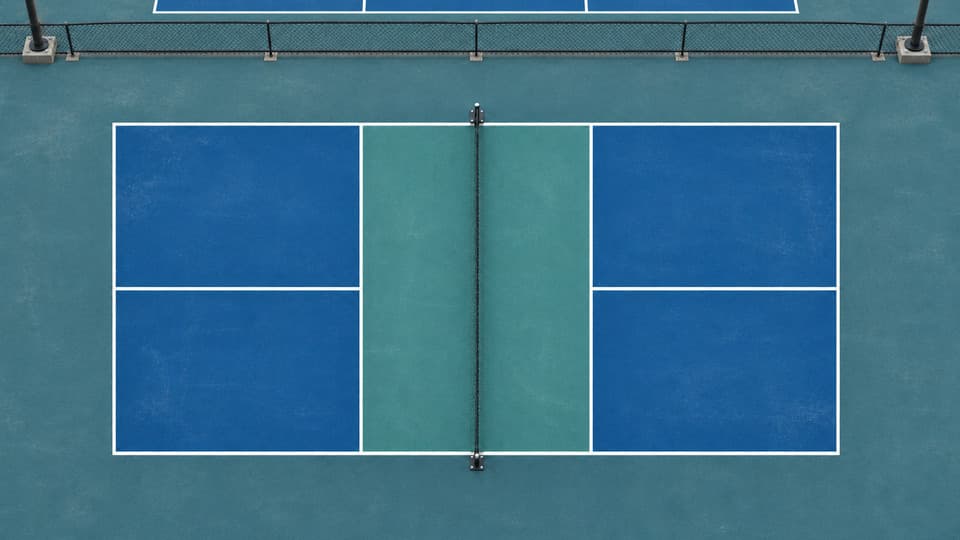
What does the visual lesson show?
Watch the first point of contact.
Judge the landing, and use the line-call guidance below.
Generated illustration with authored motion. Ball flight is illustrative; the written lesson explains the decisions.
Which boundary applies to a pickleball line call?
In ordinary rally play, a ball touching a boundary line is in. A serve must clear the kitchen and its boundary. Distinguish a serve landing on the kitchen line from a rally ball landing on that same line. The contact location can look similar while the outcome depends on the phase of play.
What should you call when you are uncertain?
Call a ball out only when you clearly see it out. Do not infer a landing from the sound, a player’s reaction, or a spectator’s confidence. In unofficiated play, resolve your uncertainty in the opponent’s favor. Say what you saw calmly and avoid adding a speech about what the other team should have hit.
How should players handle a disputed line call?
Stop the discussion before the next serve and use the current rulebook for the precise situation. If your partner clearly saw a ball in that you called out, correct the error. Do not turn a correction into a negotiation about earlier points. The aim is the right outcome for this rally, not balancing perceived favors.
How do officials affect line-call responsibilities?
A tournament may assign line duties and appeals differently from social play. Read the event procedures and let the assigned official handle the process. A practice scenario is not a substitute for the full timing and appeal rules. Ask questions politely, give the official the relevant facts, and accept the proper resolution.
How can you apply this guide step by step?
Is the ball a serve or a later rally shot?
Decide whether the contact being judged is a serve landing or an ordinary rally landing. Similar line locations can have different implications.
What did you actually see at the bounce?
Make a clear call only from a clear observation. Do not borrow confidence from a spectator or infer the bounce from the hitter’s reaction.
How should you resolve the call before restarting?
Correct a mistaken call promptly and use the applicable procedure for a disagreement. In organized play, respect assigned officials and appeal timing.
A hypothetical worked example
How might this work in a session?
A ball lands near the baseline while you are moving. You did not see a clear separation, but the opponent’s body language suggests a miss. That reaction is not your observation of the landing. In a social game, uncertainty should favor the opponent. Now compare a serve touching the kitchen line with a later rally ball on that line: the phase of play changes the relevant rule.
What are common mistakes with pickleball line calls?
Guessing from reaction
Return to the observed bounce; a disappointed hitter does not establish that the ball was out.
Automatic replay demanded
Distinguish uncertainty from a rule-authorized replay and favor the opponent when your call is uncertain.
Serve exception forgotten
Identify the kitchen boundary and the fact that the ball is a serve before applying a general line statement.
What should you try during your next session?
Describe three imagined bounces: clearly inside, clearly separated outside, and obscured. Practise the correct concise response without arguing about what you wished had happened.
What to observe: Judge the clarity and fairness of the process rather than how many calls favor your team. A learning graphic cannot settle a real close bounce from a different angle.
A clear view supports a call. Uncertainty is not permission to guess an opponent’s ball out.
Check your understanding
Choose an answer to see the explanation.
What should you record after trying the task?
Name one observable condition, then count a small sample. These taps record your observations; they do not detect shots or assess a rating.
Define one condition before counting.
Entries stay in this page and reset on reload. Export a text file to keep them.
What else should you know about pickleball line calls?
Is a pickleball that touches a line in or out?
A ball touching a boundary line is generally in. The serve is the important exception: contact with the non-volley-zone line makes the serve a fault. Check the applicable rules for the specific landing.
Who makes a line call in an unofficiated game?
Players make calls on their own end. Call a ball out only when you clearly see it out; resolve uncertainty in the opponents’ favor. Use the event’s procedures when officials are present.
Which sources support this guide?
- 2026 USA Pickleball Official Rulebook
Primary reference for standard-play rules and event-rule exceptions.
- USA Pickleball: Sportsmanship guide
Conduct, fair rotation, and line-call guidance; official rules take precedence.
How was this guide prepared?
Prepared with AI assistance for human editorial review. No named coach has reviewed this draft. Examples and practice tasks are editorial explanations; no first-hand coaching or product testing is claimed.
Sources checked: . For organized play, check the current rulebook and event format. This date records source checking, not coach approval.