 Pickleball Tayo
The short answer
What is topspin in pickleball?
Topspin is forward ball rotation created through contact, but a dipping flight alone does not measure spin. Practise with comfortable feeds, a consistent target, and controlled pace before applying the shot in a rally.
Primary reference: USA Pickleball: Third-shot drop vs. drive.
On this page
Topspin describes forward rotation of the ball. It can influence flight and bounce, but it does not turn an uncontrolled swing into a reliable shot. Begin with a contact you can place and recognize.
What does the visual lesson show?
Watch the ball dip.
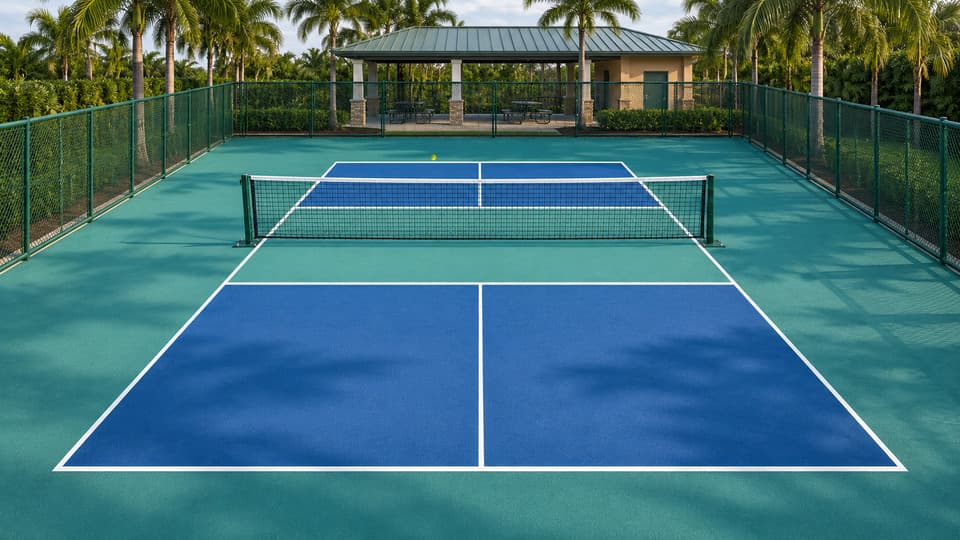
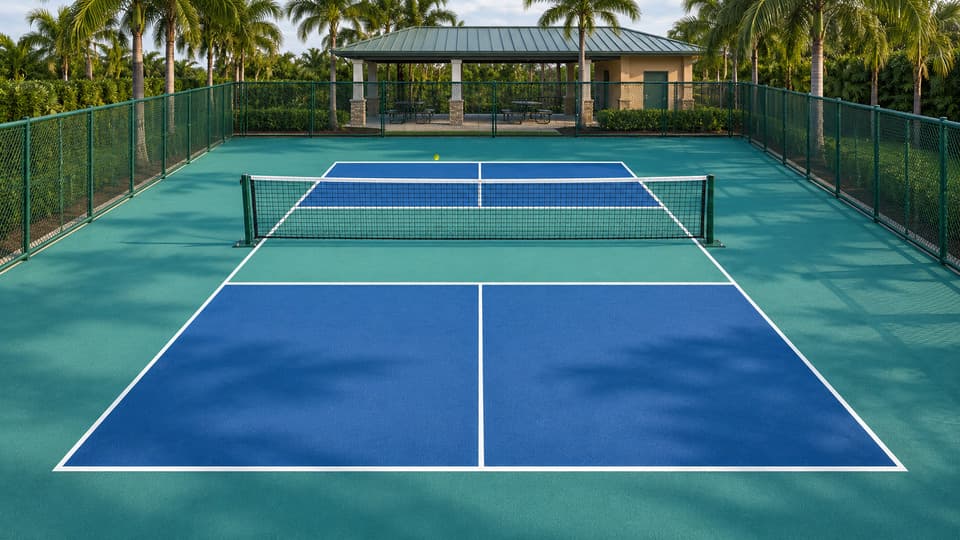
An illustrative dipping flight; contact creates the spin.
Generated illustration with authored motion. Ball flight is illustrative; the written lesson explains the decisions.
Does a dipping flight prove how much spin you created?
A curved flight does not, by itself, tell you exactly how much spin was generated. Contact, launch angle, pace, and conditions all affect what you see. The visual lesson shows an intended dipping shape; it is not a measured aerodynamic simulation. Compare your own contacts under similar feed and target conditions.
Which feeds help you learn topspin contact?
Use an easy ball and a compact low-to-high intention while directing it toward a broad target. Avoid exaggerating a last-second wrist action. If clean contact disappears, return to a simpler stroke. A coach can help distinguish the paddle path from other changes you may be making unconsciously.
How can you make a useful topspin comparison?
Hit small sets with similar feeds and record whether the ball stays in and where it lands. Add pace only after the direction is manageable. Do not compare one spectacular spinning ball with an entire ordinary set; that hides the error cost of the new attempt.
When is a topspin shot a sensible rally choice?
A topspin drive still needs the right incoming ball and a target with margin. A ball at your ankles while you are stretched does not become an automatic attack. Link the technique to shot selection and stay prepared for a block or counter even after a satisfying strike.
How can you apply this guide step by step?
How can you establish a clean, controlled contact?
Begin with a comfortable feed and a controllable path. If the intended brushing action destroys ordinary placement, simplify before adding more pace.
How should you compare flight shape and landing?
Keep the target and feed similar while observing intended dip and landing. The visual curve is explanatory, not a calculation of spin or air resistance.
How can you bring topspin into an appropriate rally decision?
Choose suitable incoming balls and prepare for the block. Spin changes an option; it does not make every stretched low contact a sensible attack.
A hypothetical worked example
How might this work in a session?
A player sees one dipping drive and assumes a new paddle generated a specific spin rate. Nothing was measured, and the launch angle changed too. Keep the interpretation modest. Use a repeatable feed and broad target, then compare the whole set. A useful spinning contact still needs direction and recovery; a rotation graphic explains an idea without proving the aerodynamics of the real ball.
What are common mistakes with pickleball topspin?
One curved ball proves spin rate
Avoid numerical claims without measurement and account for changed launch and pace.
Exaggerated wrist motion
Return to controlled contact and seek individual coaching if the mechanics remain unclear.
Spin used to excuse poor choice
Check balance and available height before attempting a faster drive.
What should you try during your next session?
Compare two short sets under the same feed: ordinary controlled contact and an intended topspin contact. Record in balls, landing bands, and recovery rather than a claimed rotation number.
What to observe: Keep perceived flight separate from measured data. The goal is a useful repeatable shot, not a numerical performance claim derived from appearance.
Work on a repeatable path and target before asking spin to solve every miss.
Check your understanding
Choose an answer to see the explanation.
What should you record after trying the task?
Name one observable condition, then count a small sample. These taps record your observations; they do not detect shots or assess a rating.
Define one condition before counting.
Entries stay in this page and reset on reload. Export a text file to keep them.
What else should you know about pickleball topspin?
What does topspin do to a pickleball shot?
Topspin is forward rotation that can help a shot dip. Its effect depends on the actual contact, pace, and conditions; an illustrative animation does not establish a measured spin rate.
Can topspin guarantee that a hard shot stays in?
No. Spin does not remove the need to control pace, height, and direction. Start with a repeatable stroke and room inside the lines before trying to hit a faster dipping ball.
Which sources support this guide?
- USA Pickleball: Third-shot drop vs. drive
Technique background for choosing between a drive and a soft drop.
- USA Pickleball: Level three skills
General stroke, control, and positioning resources; not an assessment of a reader’s rating.
How was this guide prepared?
Prepared with AI assistance for human editorial review. No named coach has reviewed this draft. Examples and practice tasks are editorial explanations; no first-hand coaching or product testing is claimed.
Sources checked: . For organized play, check the current rulebook and event format. This date records source checking, not coach approval.