 Pickleball Tayo
The short answer
How can you practise pickleball control against a wall?
Use a permitted wall and a clear surrounding space, choose a manageable distance and pace, and give each set one contact goal. Record controlled repetitions, then test the same habit with a partner.
Primary reference: USA Pickleball: Educator and program resources.
On this page
A wall can provide repeated contacts when a partner is unavailable. It can also encourage hurried swings if you stand too close or increase pace before you can recover.
What does the visual lesson show?
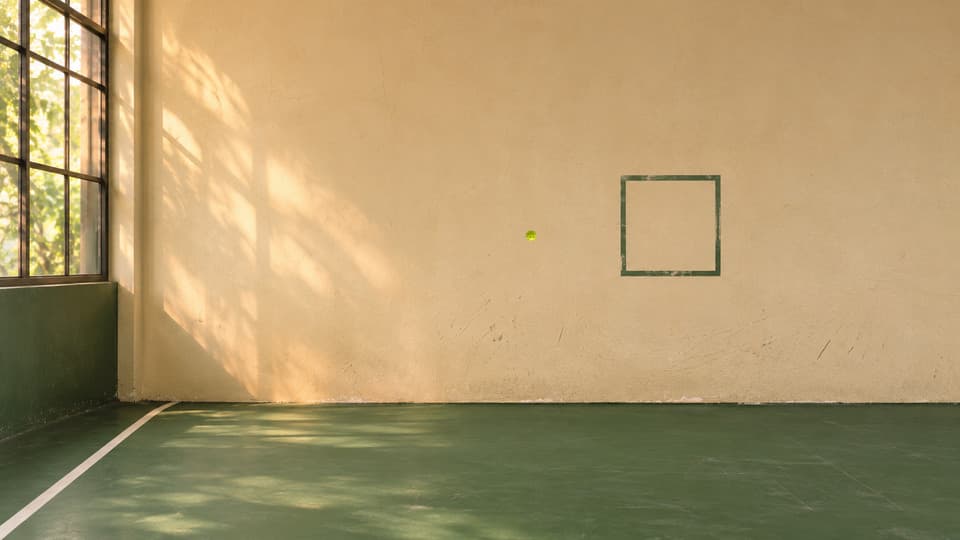
Keep the wall rally controlled.
Aim for a repeatable height and an easy rhythm.
Generated illustration with authored motion. Ball flight is illustrative; the written lesson explains the decisions.
What should you confirm before using a practice wall?
Use a suitable sports wall where ball play is allowed. Check people, windows, doors, nearby vehicles, surface condition, and noise. Do not attach tape or targets without permission. A clear practice lane includes the area where a missed ball may travel, not just your starting footprint.
How far should you stand from the wall?
Choose enough space to see the rebound and recover. Start gently toward a broad reference. If each reply forces an emergency swing, reduce pace or increase distance within the permitted area. The objective is controlled contacts, not the fastest possible exchange in the smallest space.
How can you give a wall set one purpose?
Work on compact preparation, paddle recovery, or a particular contact side. Count only contacts that meet your chosen condition. Reset after a miss rather than chasing a loose ball while continuing to swing. Keep spare balls outside the foot area.
How can you test wall practice with a real partner?
At your next court session, ask a partner to vary the feed and observe the same habit. A wall cannot choose to volley, change formation, or attack a floating reset. Use its repetition to support a skill, then test the decision against a real reply.
How can you apply this guide step by step?
How should you check permission and surroundings?
Confirm permission and enough clear space for missed balls. A wall in a building is not automatically a permitted practice facility.
How can you repeat the contact deliberately?
Use gentle pace and a broad reference at a recoverable distance. Choose one condition a contact must meet before counting it.
How should you test the habit with a partner?
Carry the specific habit into a real feed where an opponent can change pace, direction, and intention. Do not label the wall result a match rating.
A hypothetical worked example
How might this work in a session?
A player stands close to the wall to increase contact count, but every reply forces a hurried swing. Moving to a permitted distance and lowering pace reduces the total while improving control. Define what counts before the set: a clean contact, balanced finish, or paddle recovery. Otherwise a higher number can reward exactly the frantic action you wanted to change.
What are common mistakes with a pickleball wall-control drill?
Count rewards scrambling
Only count contacts that meet the defined control condition.
Ball escapes toward people
Stop and change the setting or task rather than continuing near unsuitable surroundings.
Wall success treated as tactics
Test against a partner’s varied response before claiming match effectiveness.
What should you try during your next session?
Use a short silent timer and count controlled recoveries. Pause to clear loose balls and note whether pace or distance needs adjustment before another set.
What to observe: Keep the wall, distance, ball, and chosen condition in the log. A tally without those details is difficult to compare honestly.
Choose a permitted space and a recoverable pace. A wall tally is not a match rating.
How long should you practise?
05:00
Ready when you are.
Silent timer. Keep the page open. Elapsed time is reconciled when a background tab resumes.
Check your understanding
Choose an answer to see the explanation.
What should you record after trying the task?
Name one observable condition, then count a small sample. These taps record your observations; they do not detect shots or assess a rating.
Define one condition before counting.
Entries stay in this page and reset on reload. Export a text file to keep them.
What else should you know about a pickleball wall-control drill?
Can any wall be used for pickleball practice?
Use a permitted, suitable surface with clear space around and behind you. Check nearby people, property, noise limits, and footing before hitting; a convenient wall is not automatically a practice area.
How should you make a wall drill harder?
Change one condition at a time, such as the target or starting distance, while keeping a controlled feed. Return to an easier setup if contact or safe recovery becomes inconsistent.
Which sources support this guide?
- USA Pickleball: Educator and program resources
Program and educator resources; the local worksheets are original planning examples.
How was this guide prepared?
Prepared with AI assistance for human editorial review. No named coach has reviewed this draft. Examples and practice tasks are editorial explanations; no first-hand coaching or product testing is claimed.
Sources checked: . For organized play, check the current rulebook and event format. This date records source checking, not coach approval.